
What is Domestic and Family Violence?
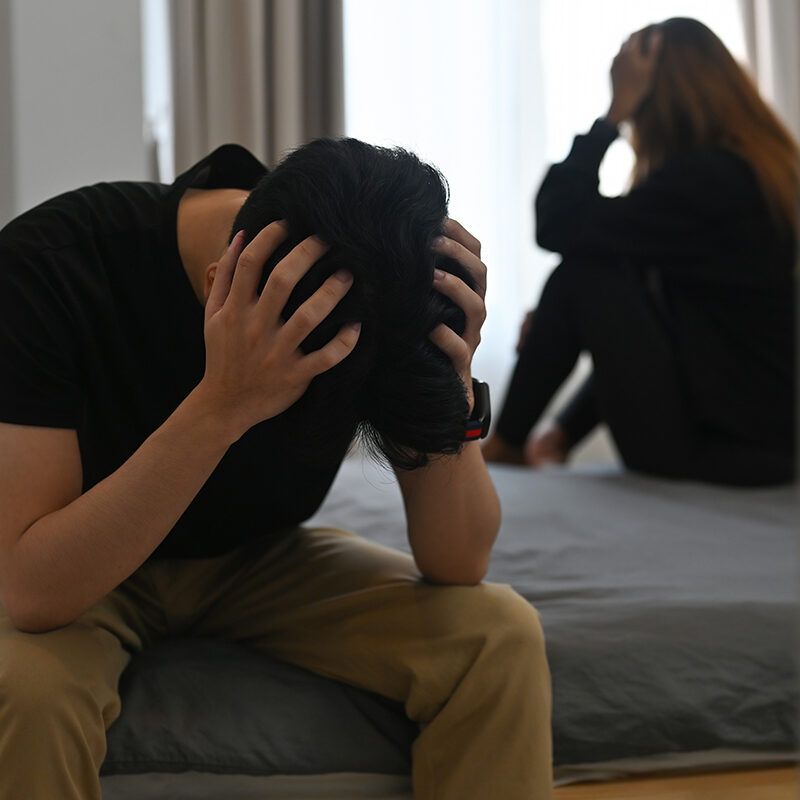
In Australia and New Zealand, we generally use the term ‘domestic violence’, but calling it ‘domestic abuse’ highlights that it is broader than just physical violence. Jess Hill (2020, p9), in her investigation into domestic violence in Australia, notes that 'in some of the worst abusive relationships, physical violence is rare, minor or barely present', and in quoting victim Advocate Yasmin Khan, she writes, 'Many women that we support assure me that there has been no domestic violence – “he’s never laid a hand on me” – but on deeper questioning and reflection, realise they have been abused for many years, in ways that have been more subtle, but just as damaging and potent.'
‘Family violence’ is a broader term than domestic violence, as it refers not only to violence between intimate partners but also to violence between family members. This includes, for example, elder abuse, abuse from family members and adolescent violence against parents. Family violence includes violent, abusive or intimidating behaviour, or any other form of behaviour that coerces or controls a family member or causes that family member to be fearful. In the communities of Aboriginal peoples, ‘family violence’ is often the preferred term as it encapsulates the broader issue of violence within extended families, kinship networks and community relationships, as well as intergenerational issues. This page will focus on domestic violence and some information on elder abuse.
Domestic violence is most often a gendered issue, perpetrated by men against women and children, with roots in unequal power relations between men and women. We recognise that women can also be violent towards men, but this occurs at much lower rates, and there is a much lower chance of hospitalisation or death. For more information on this, see the Domestic Violence in Australia and New Zealand section and the downloadable document ‘Domestic Violence and Gender’ below.

To read more about the types of behaviours involved in these different forms of domestic violence, click on the downloadable ‘Forms of Domestic Violence’.
For further reading, see the Domestic Violence Handbook section (pages 14 and 15) on myths and facts about domestic violence.
Forms of domestic violence
Domestic violence may involve any type of abusive behaviour, including physical abuse, which has an emotional and psychological impact on the person experiencing the abuse and their children. As well as the feeling of fear, it can include shame, confusion, helplessness, hopelessness, guilt, anger, depression, anxiety, a sense of entrapment, low self-esteem, loneliness and a sense of failure, as well as the possibility of physical injury, neglect and death.
Traditionally, we thought of domestic violence as physical and sexual violence; however, it also includes psychological and emotional abuse, social abuse, verbal abuse, economic or financial abuse, legal abuse, spiritual abuse, technological abuse, coercive control and entitlement. The term ‘coercive control’ is also used to describe types of non-physical domestic abuse, and it is defined as:
'… a pattern of controlling and manipulative behaviour designed to intimidate, isolate, and control a person.' – Australian Parliament House standing committee (2021)
'… patterns of abusive behaviour designed to exercise domination and control over the other party to a relationship. It is often a process that happens slowly over time and can be nuanced in nature, making it difficult to identify. It can include a range of abusive behaviours – physical, psychological, emotional or financial – the cumulative effect of which over time robs victim-survivors of their autonomy and independence as an individual.' – McGorrery and McMahon (2020)
One specific form of physical abuse, strangulation or choking, has been recognised in recent years as particularly dangerous. It can occur repeatedly, possibly several times a week, and the most common time to die from strangulation is several months later. It can also cause damage to the brain and can have the same outward signs as if the victim had drunk too much alcohol.
Domestic violence can be found in conjunction with other health issues, such as mental health issues, alcoholism and substance abuse. While mental health issues and addictions can contribute to abuse within intimate relationships, this abuse is still called ‘domestic violence’, because the partner ultimately has a choice regarding seeking help for the alcoholism or addictions and working to protect their family. Addictions or mental health issues do not excuse violent or abusive behaviour toward one’s partner or family.

Elder abuse
Over recent years, we have become more aware of abuse toward seniors. In July 2021, the National Elder Abuse Prevalence Study was published in Australia. This research estimates that for those over 65 years of age, 14.8% have experienced some form of elder abuse. Psychological abuse (11.7%) is the most common, with neglect, financial abuse and physical abuse also being noted and a small percentage of sexual abuse.
Adult children, especially sons (twice as likely as daughters), were the most likely to be abusive, but domestic abuse from partners and other carers also occurs. It appears elder abuse may be under-reported, because 6 out of 10 seniors do not seek help.

The experience of domestic violence
As part of the LCA's ‘Hidden Hurts, Healing Hearts’ campaign, we have included real accounts from those who have experienced domestic violence in the Lutheran church, as well as one from a member of another church. https://www.preventdfv.lca.org.au/our-stories/
For further stories
The Joint Churches Domestic Violence Prevention Project (JCDVPP) in Queensland has produced many resources, including the 2021 book ‘The Good, the Bad and the Ugly: Questions Women Ask About Relationships and Christian Beliefs’. This includes the story of Karina, a Christian woman in Queensland who experienced significant coercive control but has now been able to rebuild her life beyond this relationship.
If you would like to hear from some women outside of the church who have experienced abuse, you can also watch ‘The Abuse (women)’ video at www.hma.co.nz/resources/family-violence


Cycles and patterns of domestic violence
While every domestic violence situation is unique, there are also many similarities. The information below outlines some common elements that can be part of a repeating cycle of abuse. Recognising this may prepare people for what may happen and show them that they are not alone.
However, it must be noted that not all domestic violence goes through a cycle. Sometimes it appears to be a sudden violent incident, or long years of emotional abuse that destroys their self-esteem, or continual rape (Joint Churches Domestic Violence Prevention Project 2021). However, David Mandel (Safe and Together Institute) states it is important to look for the ‘perpetrator patterns’, to understand what it is really like for this person and these children, and to be able to support effectively those experiencing abuse.
A common pattern was identified by Lenore Walker in 1979 and is described in the Domestic Violence Handbook (pages 10–11).
Domestic violence is rarely a one-off event. Generally, we expect there to have been a build-up over time of controlling and disrespectful behaviour. As described above, this cycle of violence involves a ‘build-up phase’, an ‘abusive incident’, and then the ‘getting back in’ phase.
Recognising this common pattern can be useful, because after there has been an abusive incident, the perpetrator of the abuse may regularly appear remorseful, but with no real intention of changing. They may be working very hard to show they are sorry and to behave in a caring way, with the aim of convincing their partner that it was a one-off incident, so they will forgive them and move on – until tension builds again. Over time, the ‘honeymoon phase’ often becomes a ‘truce’, before the next build-up phase (see diagram).
Until the couple recognises that domestic violence is usually a repeating cycle, it can feel like there is no escape and no choice. Naming the cycle opens the possibility for those experiencing the abuse to understand that the perpetrator of the abuse is not just reacting; they are choosing to use abusive behaviours to manage their issues and to control their partner.
This is also true where abuse of alcohol, substance abuse or mental health has been given as an excuse for the violence. If the perpetrator is truly remorseful, they will seek counselling to be accountable, take responsibility for changing their behaviour and substance abuse, and develop healthy, respectful interactions with their partner.

Domestic violence in Australia and New Zealand
In both Australia and New Zealand, domestic violence is a significant issue. In Australia, one woman a week is killed by her intimate partner.
In Australia, statistics on intimate partner violence can be found at the following links.
- www.abs.gov.au/statistics/people/crime-and-justice/personal-safety-australia/latest-release#key-statistics
- www.anrows.org.au/research-areas/statistics-prevalence-and-community-attitudes
Statistics for domestic violence in New Zealand can be found at nzfvc.org.nz/family-violence-statistics
Although there has been limited research into domestic violence in the Christian churches in Australia, the National Anglican Family Violence Research report (2021) found: 'The prevalence of intimate partner violence among Anglicans was the same or higher than in the wider Australian community. The prevalence of intimate partner violence among church-attending Anglicans was the same or higher than among other Anglicans.' Research done in Australia in 1992 among the Anglican and Uniting churches and in 1993 in the Catholic Church (quoted in Julia Baird and Hayley Gleeson, 2017) found that 'At least one in five husbands who abuse Christian wives go to church regularly'. This is discussed further under the ‘Faith and Domestic Violence’ section.
Domestic violence is evident in the lives of people both within the church community, schools and institutions and in the wider community where we live and work. We cannot turn a blind eye to this. As Jesus said, 'I tell you, whatever you did not do for one of the least of these, you did not do for me' (Matthew 25:45).
How did we do?
Did you find what you were looking for? Did you find anything out of date or not working properly? Please tell us how we can improve this page.
Contact us
Where to now?

