
Responding to a Person Who is Violent and Abusive
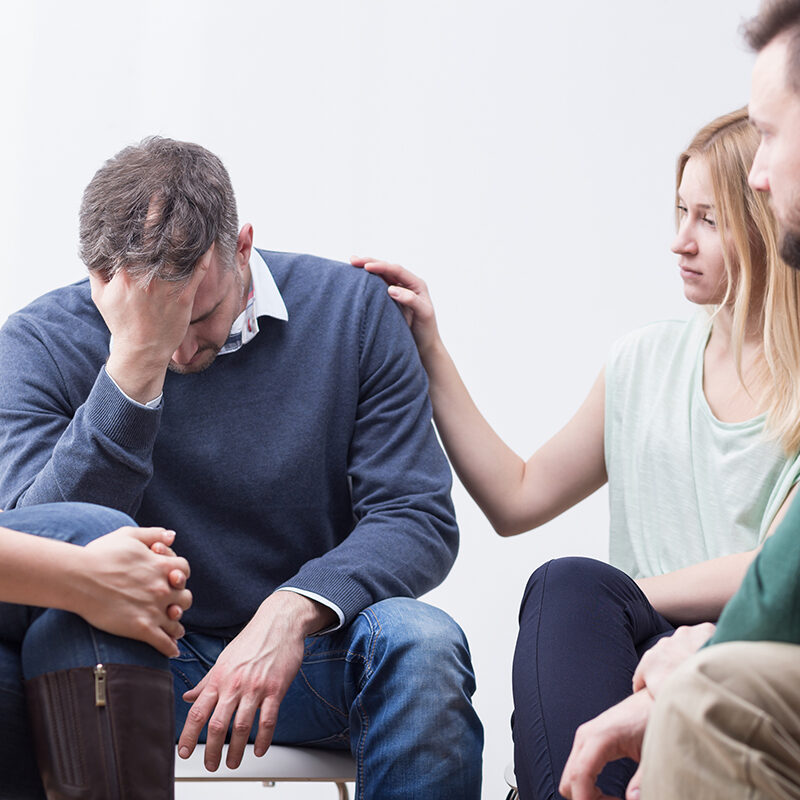
Change takes time, as well as recognising the beliefs that allowed them to use violence and control, and learning to understand the impact on their partners, children and family.
There is no excuse for abuse, from anyone, no matter the gender. There is always a choice to use healthy ways to manage and resolve conflict, discuss hurts and solve problems. It usually takes professional help to change, especially where there is coercive control or physical violence.
Expecting their family to forgive and forget without putting the work in looks like remorse, but it is not true repentance or taking responsibility for the hurt they have caused. Most perpetrators will also view themselves as a victim, and referral to a professional is the best course of action.
For those using violence and abuse, it has been found that real sustained change usually requires individual counselling and attendance at a men’s behaviour change group program, where the man can hear from professional facilitators, male and female, and peers who are also making the change.
Attending a weekly group for several months provides the opportunity to explore their issues and beliefs, understand the personal values they have neglected and be supported in rebuilding meaningful and healthy relationships with partners and children.

Talking to a person who has been using domestic violence
If you are talking to a person who has been using domestic violence (perpetrator):
- Be aware – if you notice disrespectful behaviour, you may be able to find a safe way to let the person know it is not okay, but only if it is safe. Do not put yourself or others in danger.
- Never confront someone if they are being violent – call 000 (Australia) or 111 (New Zealand) if an incident is occurring.
However, if a person comes to you and says they need to talk, or makes comments about their relationship in a way that makes you concerned for the safety of the family, or says they may have an ‘anger problem’ and wants to talk to you, be a first responder:
- Meet in a safe public place, and ensure that their partner is safely separated.
- Listen.
- Check the current safety of their family, if possible and safe.
- Do not give advice or suggest couples or relationship counselling.
- Refer.

Self-care
Support for personal experience of domestic violence
As you read through this information, some of you will be thinking of people you know or your own personal experience, now, in the past or in your own childhood.
No one deserves abuse or the fear that goes alongside it. You are a loved child of God. Jesus died so that you could have life, and have life in all its fullness (John 10:10). Nothing can separate you from God’s love, not '… trouble or hardship or persecution or famine or nakedness or danger …' (Romans 8:35–39).
Talk to someone you trust, and find a counsellor or psychologist to work with. 'In many cases, it is not until a person tells their story that they are able to enter into a place of healing, and remembering, because until hurt or abuses are revealed and acknowledged and the truth heard, the opportunity for change does not occur' (De Gruchy in Questions Women Ask, p17, see below for link.) Further helplines and websites are listed in the final section on resources.
Further information may be found in the booklet, ‘The Good, the Bad and the Ugly: Questions Women Ask About Relationships and Christian Beliefs’.

Self-care for pastoral carers
Walking alongside those who have experienced abuse, or encouraging a perpetrator to seek help, is usually difficult, tiring, frustrating and sometimes depressing. The Domestic Violence Handbook (p29) reminds us that you are not responsible for the violence – that is the responsibility of the person who chooses to use violence. You can only support the person experiencing the violence to understand their choices and prioritise the safety of themselves and their children.
In summary, 'Because it is not your role to fix the situation, do not feel pressured to offer a solution. Your role is to offer genuine ongoing support alongside an appropriate domestic violence service.' Carers can experience vicarious trauma and often need to find someone to debrief with. Find someone you trust who understands the basics of domestic violence and will listen to you and treat all information confidentially.
For more information on self-care, as well as ideas and resources, see ‘Self-Care’ under Health and Wellbeing.
How did we do?
Did you find what you were looking for? Did you find anything out of date or not working properly? Please tell us how we can improve this page.
Contact us
Where to now?

