Music stirs memories

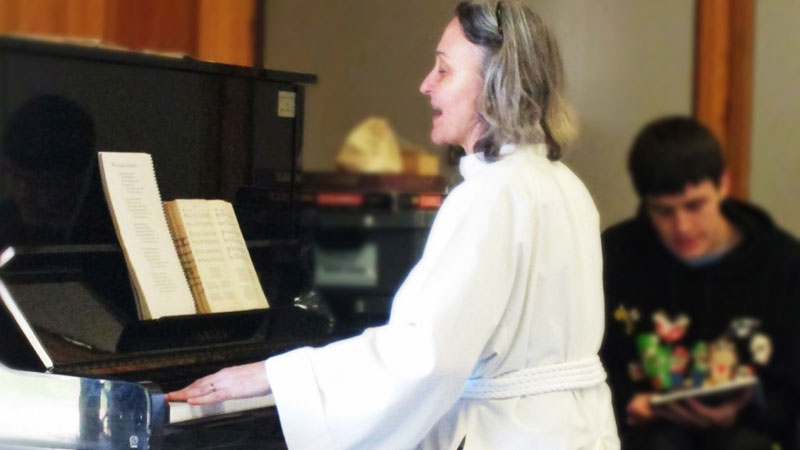
Since her childhood Heidi Smith has known about the influence music can have on people’s physical and mental wellbeing. And having played organ and piano for church services in congregations and aged-care facilities since she was a teenager, she has seen positive changes in people living with Alzheimer’s disease and other forms of dementia. Now as a chaplain, she uses music therapy as one avenue to support people living with dementia.
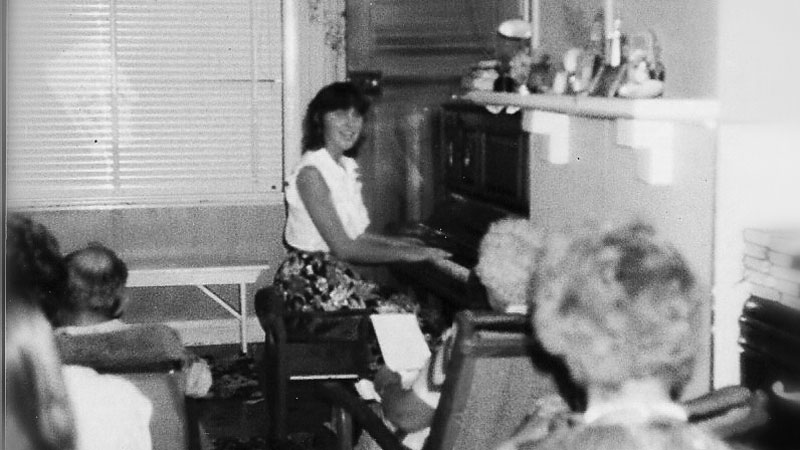
I grew up with music and singing as part of my home life. We had family devotions, singing Christian hymns and songs within that intergenerational setting. My grandparents loved to sit around the piano and sing while I played. My siblings and I used to put on concerts for elderly ‘shut-in’ people in our lounge room and music was a great connector for community building in that space.
I can’t really remember a time when I didn’t ‘hang out’ with elderly people in care and those living with dementia. My grandmother was diagnosed with dementia and lived with us before moving into a nursing home. Our youth group sang carols in the local hospital at Christmas, and the way people diagnosed with dementia responded by clapping, smiling and singing encouraged me to focus on the power of music to help connect people to their memories.
Additional research in music therapy theories supported my earlier observations.
The SINGING, along with the remembered church – experiences, enabled certain people to REMEMBER what to do for some moments again.
I have worked professionally for six years with more than 40 residents living with dementia since becoming a full-time Lutheran Community Care (LCC) chaplain at Immanuel Gardens Retirement Village, Buderim Queensland, and now at Zion Lutheran Home, Nundah Queensland.
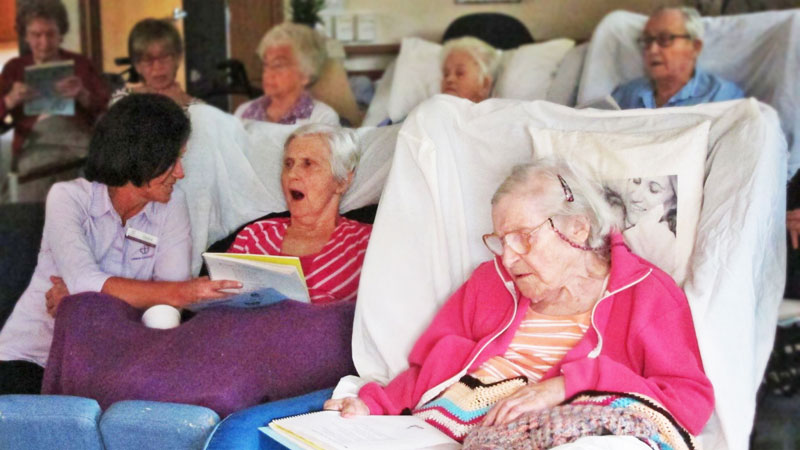
While at Immanuel Gardens, I led story and song sessions. The village had ‘old-time’ large print songbooks and residents would choose songs, calling out the numbers they wanted. Many residents living with dementia love hunting for numbers, since numbers are often the last written texts people remember.
I would play the piano and sing the chosen song with everyone joining in. Residents living with dementia loved to tap and clap along to the music.
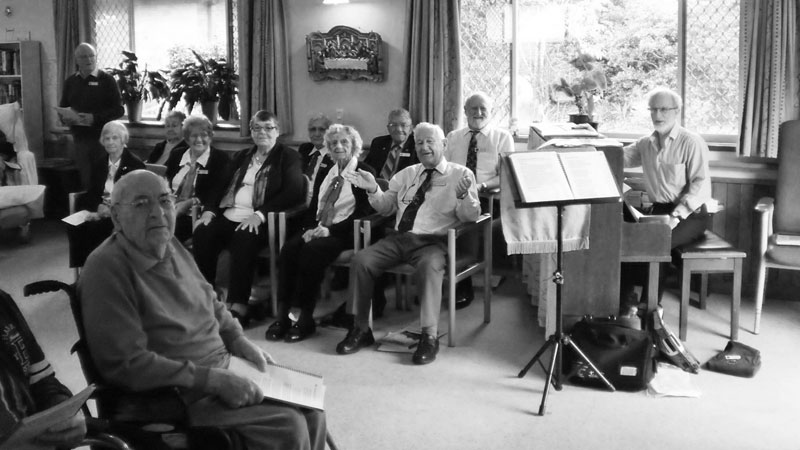
As a chaplain at Immanuel Gardens, I also led church services for people who at that time lived in a ‘secure wing’ due to their diagnoses of various forms of dementia. During those worship times, I noticed amazing behavioural changes which occupational therapy students doing research also noted: some residents moved from random roaming, looking off in the distance and/or aggressive behaviours, to walking into the room for church and sitting down. At church, they sat together, holding a hymnbook, looking up the numbers of hymns and singing together. Many would model earlier learned ‘church behaviours’, such as sitting quietly and listening to Bible readings and a sermon. They prayed the Lord’s Prayer and confessed the Apostles’ Creed together, while others joined in rituals such as crossing themselves.
One man who hardly ever spoke would sing with gusto for various hymns – I learned he had been an Anglican choir boy. A woman, who needed to be fed by staff since she was unable to remember how to feed herself, ate lunch with her utensils straight after church. And a resident who ordinarily isolated herself, turned and shook her neighbour’s hand during the ‘passing of the peace’, then remained holding hands until the next song.
The singing, along with the remembered church tactile and community experiences, enabled certain residents to remember what to do for some moments again.
My research has found the positive effects of music therapy for people living with dementia are due to its brain activity-boosting power. According to the Alzheimers.net website, researchers believe this happens because singing is engaging; music evokes emotions that bring memories, can change moods and manage stress and bring emotional and physical closeness. Musical aptitude and appreciation also are two of the last remaining abilities in people living with dementia.
Zion Lutheran Home has a professional music therapist and what she does musically is almost magical at times in enhancing people’s mood and behaviours as they live with dementia. This ‘music magic’ happens even more potently for some of those same people in worship since most in this age group have come from Christian backgrounds, with the remembered experiences of church and Sunday school. This is why many family members also attend Sunday worship at LCC homes, since they experience a small time of familiar activity, connection and community with their loved one.
Music and singing are really helpful tools we can use to bring God’s love to life for people living with dementia and for those who care for them. It is crucial we don’t leave them alone on this difficult journey. Our Lord promises he will never leave us or forsake us (Deut 31:6,8, Joshua 1:5), so why would we, the body of Christ, leave and forsake those who often forget themselves and therefore need our Lord’s presence the most?
Prayer:
‘Let your word fill my days,
let your music fill my ears,
let your song fill my life,
now and evermore.’
(Robin Mann’s Let Your Word Fill My Days ATN 67 1976)
What can we do to care for people living with dementia?
- Don’t suffer short term memory loss ourselves and forget that people living with dementia exist
- Regularly visit people living with dementia who we know in our families, or from our congregation and/or community
- Invite congregational members living with dementia to church, along with their spouse or carer, and help care for them before, during and after the service in ways that they choose to be supported
- Help arrange and support regular community worship services, with music and hymn singing, for Christian people living with dementia in a local aged-care home. Volunteer in that community
- Learn anew that even though we might forget everything we know, including our reason and ability to express our faith, we have a Saviour who has promised we are eternally ‘fully known’ by him (1 Corinthians 13:12), even by the number of hairs on our head!
Heidi Smith is LCC’s full-time aged-care chaplain at Zion Lutheran Home, Nundah
This feature story comes from The Lutheran August 2016. Visit the website to find out more about The Lutheran or to subscribe.
READ MORE STORIES ABOUT chaplaincy, dementia, ministry with ageing, music, Qld
