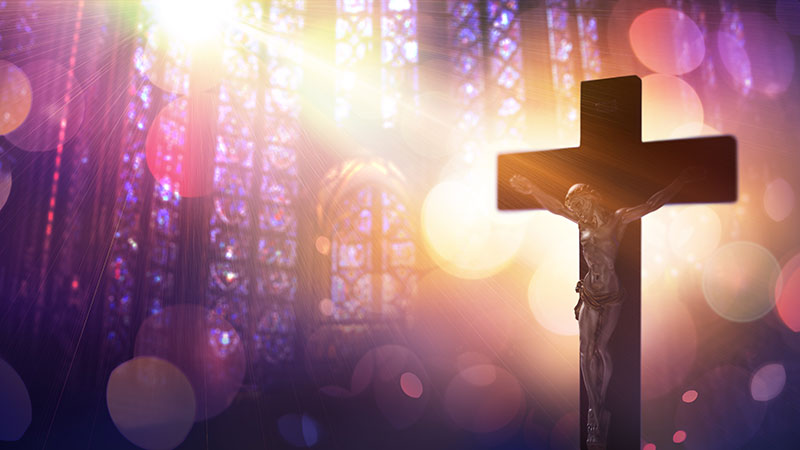
God made flesh

RHYTHMS OF GRACE (PART 6 of 8)
In the ebb and flow of liturgy, God is at work, whether we hear him or not.
This story is also available as a PDF (download).
Yet these words express two fundamental realities about the way God relates to us: physically and freely. And it is particularly in holy communion that we see this, for there God meets us through the flesh of Jesus, and does so as a free gift. Let’s consider the first of these aspects, leaving the second for next month.
God has always taken more interest in the physical world than we might imagine. Genesis describes the considerable involvement God has in the creative process before finally pronouncing his work ‘very good’ (Genesis 1:31). Then, as the Old Testament unfolds, God is never far from the flesh: in birth and death, farming and famine, sex, sickness and sacrifice, God is right there, intimately involved with his people’s spiritual and bodily existence.
But in the New Testament God moves even closer to our flesh—by entering it! ‘The Word became flesh and dwelt among us’ (John 1:14). Throughout his public ministry, Jesus, the Incarnate One, attends to people’s bodily existence: healing them, releasing their flesh from malign spirits, feeding and eating with them, sometimes playing host and chef at the same time. And when he embarks upon his final act of healing and forgiving, this also takes place in the flesh: ‘He himself bore our sins in his body on the tree’ (1 Peter 2:24). Yet flesh and death do not remain partners for long. By raising Jesus from the dead— physically — God has given the clearest indication ever that our bodies matter to him, that our flesh matters, in fact, that matter matters!
Is it any surprise, then, that the pledge of our Lord’s ongoing presence and spiritual-yet-physical care takes place through one of the most common activities known to humans: a meal? In broken bread and outpoured wine, among guests gathered at a common table,
God confirms his original word over all creation: ‘very good’. No wonder that for the early church, the communion meals spilled over into acts of common charity: succouring the sick, visiting the imprisoned, supporting the widow and orphan, and even caring for the bodies of the deceased. How significant, that the very same offerings providing bread for the sacrament would also be taken to the sick and suffering.
While our contemporary communion practice remains somewhat distinct from the everyday meal, we do well not to forget the essential link between communion and charity. For our confession that ‘holy communion is the true body and blood of our Lord Jesus Christ …’ is not simply a sacramental extra tacked on to our faith. Rather, this holy meal is just typical of the kind of God who becomes incarnate in Jesus, who gives himself to us physically, and who feeds us in order that we might nourish and bless God’s beloved creation.
Rev Linards Jansons teaches Liturgy and Worship at Australian Lutheran College.
‘Rhythms of Grace’ is an eight-part series about Lutheran worship, particularly liturgy, in The Lutheran 2013. Visit the website to find out more about The Lutheran or to subscribe.
